TRT FAQ: Your Most-Asked Questions, Answered
Our Team
9/25/2025
Men 35+ come to Ultimate Male with the same core questions about testosterone replacement therapy (TRT). Here’s a clear, practical guide you can trust.
1) How long until I feel the effects?
Most men notice energy/libido changes in 2–4 weeks; body composition, mood, and erections often optimize by 6–8+ weeks after dose dialing.
2) If I stop TRT, how long to return to “pre-TRT” levels?
After your last dose, levels fall over 1–3 weeks, but natural production recovery varies—often weeks to months. We can use hCG and/or enclomiphene to support faster HPTA recovery when appropriate.
3) Will my penis or testicles shrink?
Penis: no.
Testicles: may appear smaller on exogenous T because the testes “idle” when the brain stops signaling them. This is usually modest and reversible, especially if we include hCG or transition off TRT with support.
4) Can I have kids on TRT?
Exogenous T can suppress sperm. If family planning matters, we favor enclomiphene and/or hCG, lower-dose strategies, or sperm banking before starting. Many men can conceive with fertility-preserving protocols.
&srotate=0)
5) What are “normal” testosterone levels and when is TRT recommended?
We treat the patient + labs, not numbers alone: persistent symptoms plus low morning total/free T on repeat labs and no contraindications.
6) How often are labs and visits?
Typically: baseline ? 6–8 weeks after start/adjustment ? every 3–6 months, checking Total/Free T, SHBG, Estradiol, CBC/hematocrit, CMP, Lipids, and PSA as indicated.
7) Injections vs oral vs gel vs pellets—how do I choose?
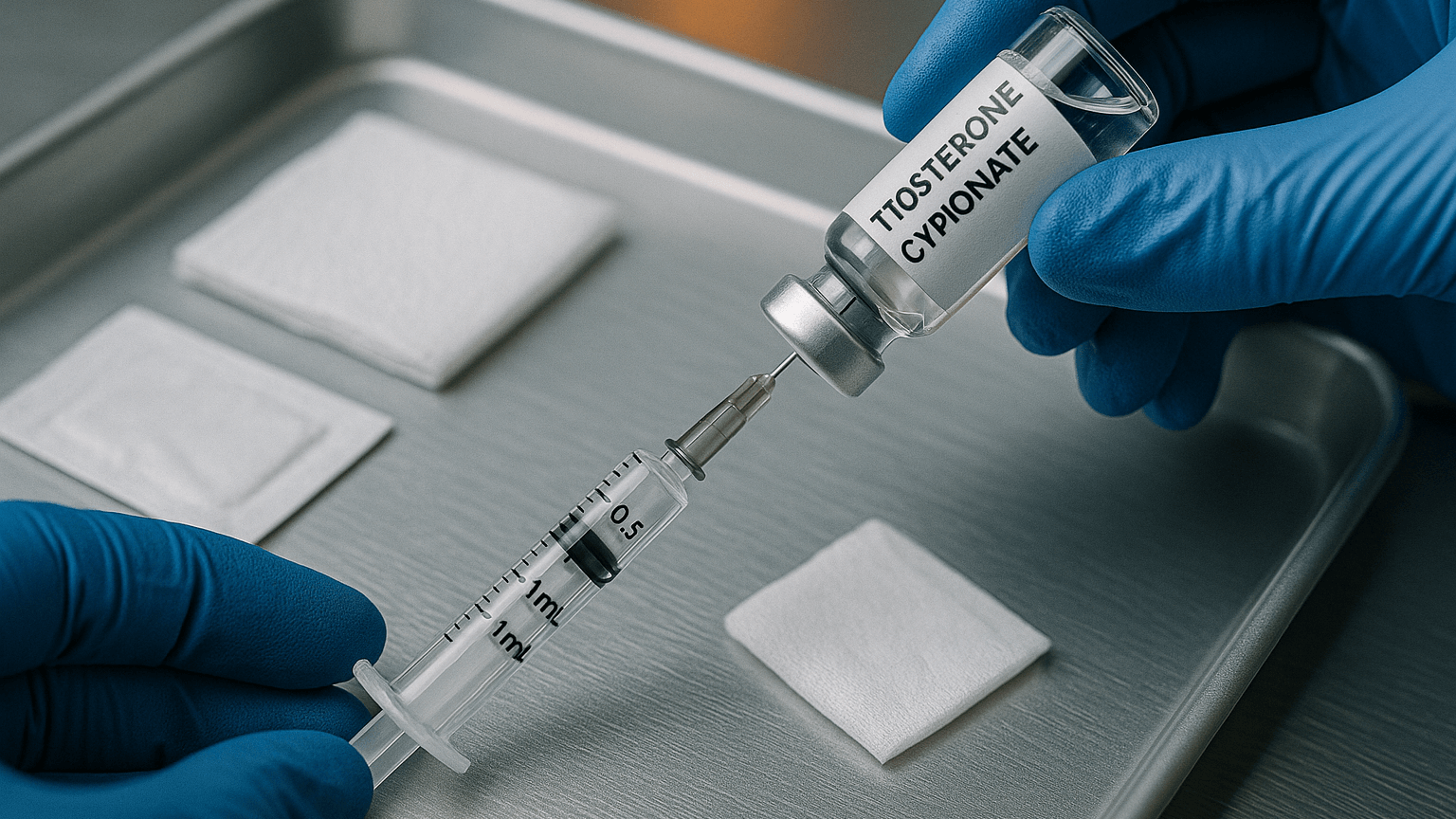
• Injections (Test cypionate): precise, cost-effective, 1–2×/week.
• Oral (Kyzatrex®): needle-free; take with meals for steady levels.
• Gel: daily, needle-free; avoid skin transfer.
• Pellets: 3–6-month convenience.
We match method to your schedule, skin absorption, and goals.
8) SubQ vs IM injections—what’s the difference?
Both work. SubQ uses a smaller needle into fat (often more comfortable). IM goes into muscle. We pick based on preference and response.
9) Will TRT help ED?
If ED is related to low T, TRT can restore libido and improve erection quality and response to ED meds. We also offer shockwave, PRP, and pelvic-floor options when appropriate.
10) What about side effects—hematocrit, estrogen, acne, hair?
We monitor and manage:
• Hematocrit: hydration, dose timing, or donation if needed.
• Estrogen balance: dosing strategies ± medication if clinically indicated.
• Skin/hair: adjust formulation, skincare, or timing.
&srotate=0)
11) Does TRT raise prostate cancer risk?
Current evidence suggests no increase in risk when monitored. We track PSA and symptoms and coordinate care based on your history.
12) Can I miss a dose or switch methods later?
Yes—consistency wins, but we can adjust schedules or switch methods (e.g., gel ? injections) to fit your life and labs.
13) Travel tips and storage
Keep vials at room temp, out of light; carry meds in original labeled container; pack needles safely; TSA allows medically necessary supplies.
14) Will TRT affect sleep, weight, and training?
Optimized T often improves sleep quality, recovery, strength, and fat loss—best results with lifting, cardio, protein, and good sleep.
15) What happens if I ever want to stop?
We plan a taper/off-ramp, often with hCG ± enclomiphene, then retest. Recovery time varies; many men return to baseline over several weeks to months.
Ready for a clear plan?
Book a Testosterone & Performance Consult at Ultimate Male—serving San Gabriel and Downey.
Call/Text: (626) 319-5261
Recent Posts
Does Low Testosterone Cause Hair Loss? TRT and DHT Explained
Hair loss and low T are not the same problem. Learn how TRT and DHT relate to thinning, and discuss your concerns in San Gabriel.
What Causes Low Testosterone in Men Under 40?
Explore causes of low testosterone under 40, testing, and fertility considerations. Request a men's hormone evaluation in San Gabriel.
Is Erectile Dysfunction a Normal Part of Aging?
Understand the connection between erectile dysfunction and aging, common causes of ED in older men, and when it may be time to consider treatment.